
Every year, beauty and lifestyle brands commit to leaning more into storytelling. The intention is there and the desire is real, but often teams don’t know where to start. Sometimes when something feels unfamiliar, we default to what we know. And so often brands end up is the race to stay current, and everyone’s feeds begin to blur. We see the same trends, hooks, formats, and trending songs, with all of this alongside the rest of social feeds that ticks the box for mandatory content for your latest launch and how to use your best seller.
Core product content and trends will always remain key. But the content that actually differentiates you are the stories only your brand can tell. The brands that do this well go beyond posting about their products, and create regular narratives that reflects both their identity and their customers' reality.
Take Eadem the skincare brand for example, they tell those stories by connecting heritage, skin science, and real community insight into narratives that make people feel seen.
But not all brand stories need to be deep and meaningful, they simply need to align with the energy and DNA of your own brand.
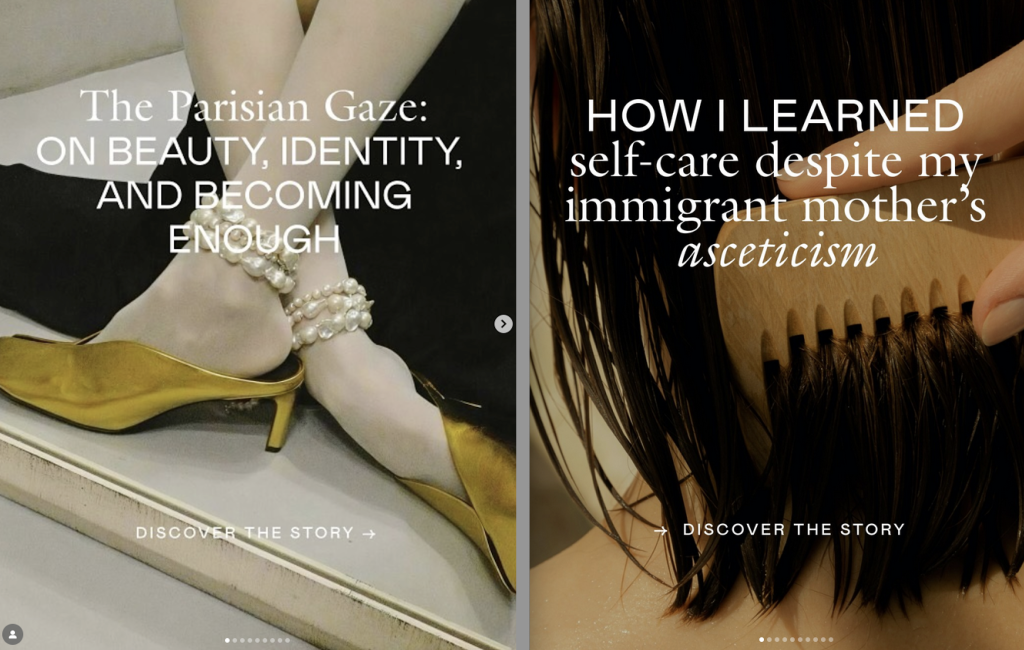
What Drives the Gap for Some Brands
What’s often missing for many brands is the bridge between a brand positioning strategy and a social strategy. That’s the nuanced layer that defines the stories only your brand can tell. It’s the strategic view that leans into the world of your customers and the world of your brand to create a balanced playbook of evergreen narrative themes that captivate the heart of your audience and make them think, “It’s like this content was created for someone exactly like me.” So how do we get there?
The Science of Storytelling
Real brand storytelling sits at the intersection of how a brand sees the world and how its customers experience it. When that intersection is well defined, patterns begin to emerge.
Start with Consumer Insights
You need to understand what your customers actually care about. Not just know their demographics, but the real stuff.
- What are they struggling with right now?
- Why are they drawn to your brand specifically?
- What’s going on in their world that keeps them up at night
- What lights them up during the day?
These insights become the foundation of content that resonates because it speaks directly to the lived experience of your audience.
Layer in Your Brand Truths
Get crystal clear on your brand DNA and point of view on the category, your customers’ lives, and the world around you. This is where so many brands get stuck because you need a clearly defined worldview before you can tell authentic stories. Without it, content feels hollow or borrowed from someone else’s playbook.
This is strategic work that requires deep customer insights, a solid brand foundation, and the ability to synthesize both. If your brand hasn’t done the hard yards on brand strategy and customer insights, you’ll need to start there first.
The Art of Storytelling
Great storytelling can still be born outside of a rigid formula, there is definitely an art to it too. Some of the strongest story themes emerge in more fluid ways, through unplanned conversations with customers, founder instincts, cultural moments, or patterns you start noticing once content is out in the world, like when a single post resonates unexpectedly and opens up an interesting comment thread. Structure and strategy matter, but so does leaving room for intuition and experimentation as your brand grows.
Your Storytelling Blueprint
When this foundational work is in place, storytelling stops being guesswork. A storytelling strategy is developed by defining narrative territories and agreeing on how they show up in content. Once established, they act as a working blueprint. Each narrative can be expressed through new posts, adapted into UGC briefs where creators interpret the brand’s world in their own voice, or developed into content series that unfold over time. Rather than starting from scratch, teams return to the same narratives and build depth and familiarity.
This is how you begin to build a storytelling content system. That specificity is what makes people follow you, bookmark your posts, and see themselves in what you’re putting out there. If you’re open to an external point of view on narrative territories your brand may not be leaning into yet, we’re happy to share our perspective.

Author: Effie Asafu-Adjaye
Effie Asafu-Adjaye is the Founder of Beautiful Sparks, a consultancy focused on brand insights, positioning strategy, storytelling, community building and modern media for beauty, fashion and lifestyle brands. Read more about Effie here. Linkedin.